-
ICS-MR: Interactive Conversation Scenarios for Assessment of Mixed Reality Communication
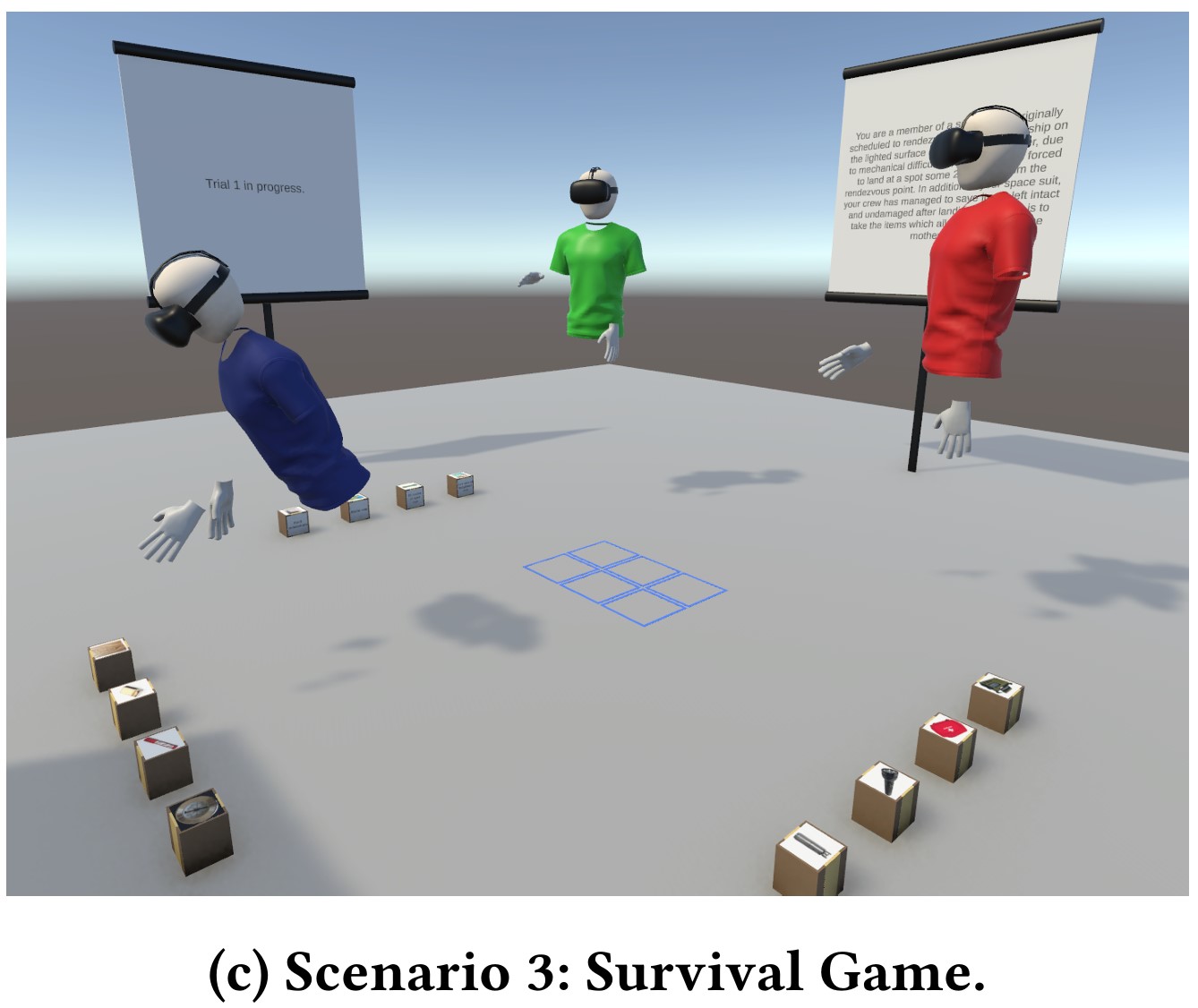
We present ICS-MR, a dataset containing three conversational scenarios designed for the evaluation of communication quality in Mixed Reality (MR) systems. Along with detailed descriptions of the conversation tasks, we provide all the materials required to incorporate the tasks into MR user studies. The materials also support application of the scenarios in real-world and video-conferencing…
-
VR Onboarding Procedures for Multiple Collocated Users: See-Through Tutorials and Group Transitions
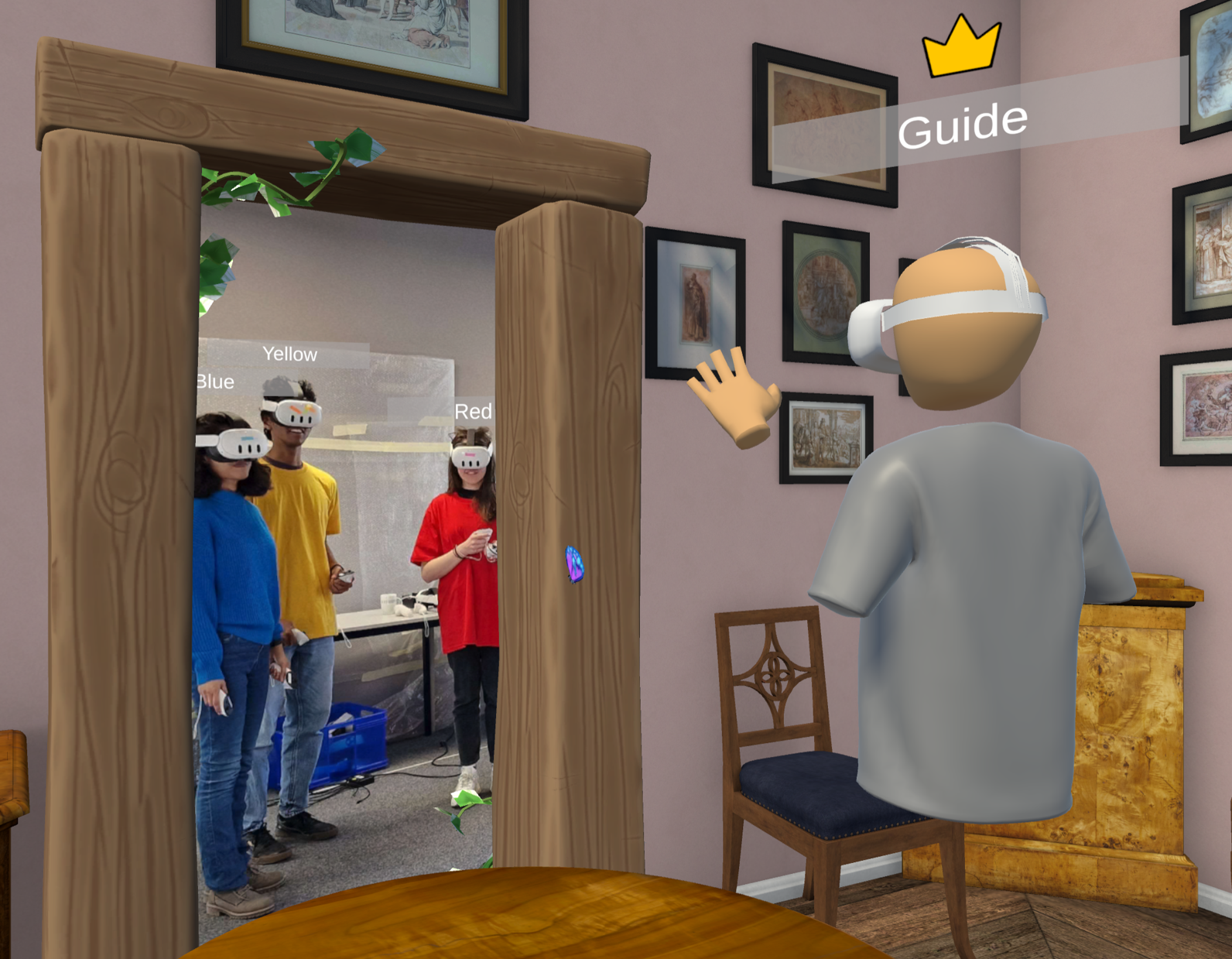
Making virtual reality (VR) more accessible for novice and nondigital users has largely focused on single-user solutions, such as tutorials, tooltips, and visual guidance cues. While structured onboarding protocols have proven effective, they do not scale well for multiple collocated users due to varying assistance needs, different learning speeds, and guidance preferences. Additionally, the sudden…
-
Rhythmic Interaction influences Synchrony Perception in VR
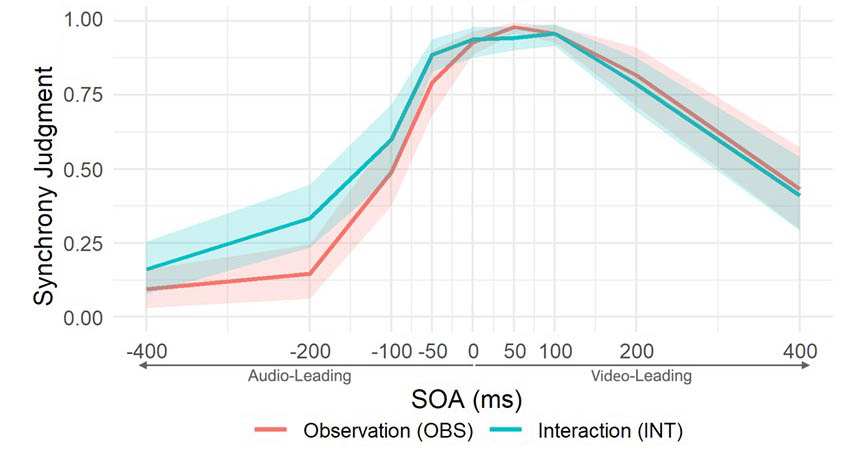
Shared synchronised activities, such as dancing and singing, can promote social bonding in both physical and virtual settings, but are susceptible to network latencies in mediated environments, such as social virtual reality (VR). Temporal delays can hinder interpersonal entrainment, causing users to feel out of sync, and reduce presence. While prior work has examined how…
-
Influence of Audiovisual Realism on Communication Behaviour in Group-to-Group Telepresence
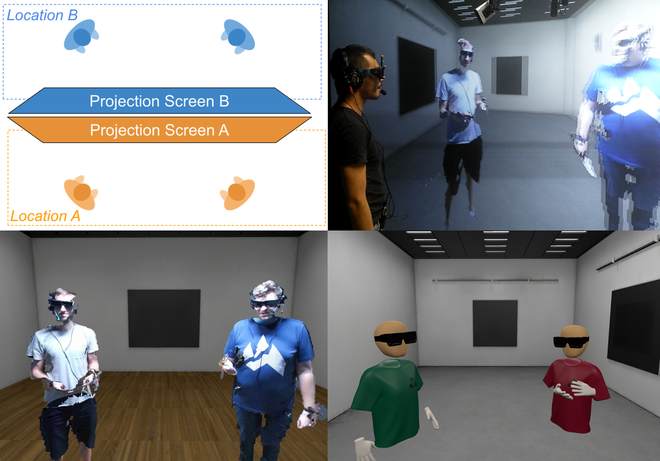
Group-to-group telepresence systems immerse geographically separated groups in a shared interaction space where remote users are represented as avatars. Notably, such systems allow users to interact with collocated and remote interlocutors simultaneously. In this context, where virtual user representations can be directly compared with real users, we investigate how visual realism (avatar type) and aural…
-
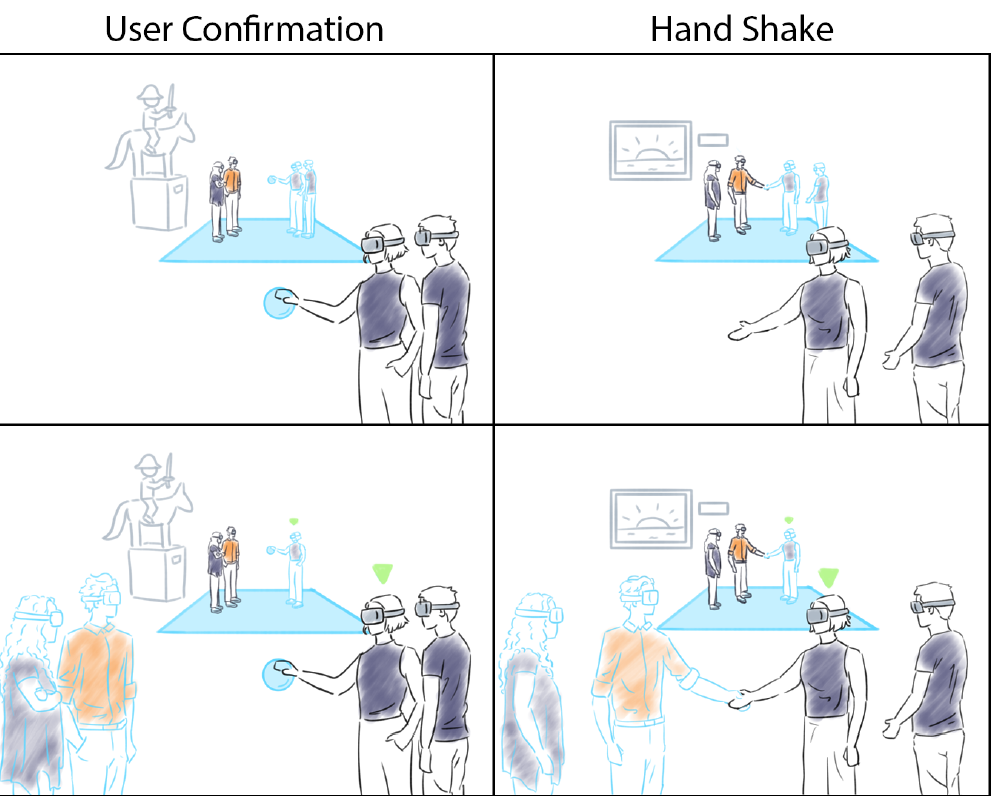
Follow Me: Confirmation-based Group Navigation in Collocated Virtual Reality
In collocated social virtual reality, the relative physical and virtual positions of users are often synchronised to reduce the risk of collisions between users. In this paper, we introduce a two-phase confirmation-based group navigation concept for collocated scenarios which allows users to stay behind and catch up to the group based on individual confirmation. The…
-

Perceived Asynchrony of Rhythmic Stimuli Affects Pupil Diameter and Smooth Pursuit Eye Movements
In networked applications, latency can disrupt the sense of synchrony by causing offsets e.g. between local speech and remote visual response. We investigate the influence of frequency and Stimulus Onset Asynchrony (SOA) on synchrony perception during rhythmic audiovisual experiences. Our results show that the Point of Subjective Synchrony (PSS) is influenced by frequency, whereas the…
Anton Lammert
Out in the water